
How to Ask for Testimonials That Build Trust

Asking for a testimonial can feel a bit awkward, can't it? But honestly, it's simpler than you think. Here's the secret: your happiest customers actually want to share their success stories. The trick is to make it incredibly easy for them right when they're feeling that post-purchase glow.
That’s how you turn a great experience into powerful social proof that does the selling for you.
Why Testimonials Are Your Secret Growth Engine
In a world full of slick ads and bold claims, trust has become the most valuable currency. People are more sceptical than ever, and they’re looking to others—people just like them—to figure out what’s worth their time and money. This is where testimonials stop being a "nice-to-have" and become a core part of your growth strategy.
Think of it like this: an advert talks at a potential customer. A testimonial speaks to them. It’s a genuine story from someone who had a problem, took a chance on your solution, and came out the other side with a win. That kind of peer-to-peer validation is far more convincing than anything your marketing team could ever write.
The Power of Authentic Stories
A great testimonial does more than just say, “this product is great.” The ones that really work tell a story of transformation. They connect with your future customers on an emotional level by describing a struggle they can relate to and showing them a real, tangible solution. This is social proof in action—that psychological nudge where people follow what others are doing to make the right choice.
When you get good at asking for testimonials, you’re not just collecting quotes. You're building a library of evidence that proves your business delivers on its promises. These stories are workhorses, doing several jobs at once:
- Building Credibility: They show that real people have put their money where their mouth is and were thrilled with the outcome.
- Overcoming Objections: A good testimonial often tackles the exact doubts and hesitations a potential customer is wrestling with.
- Boosting Conversions: Sprinkling testimonials at key decision points on your website can give people the final push they need to buy.
A testimonial is the final, crucial step in a positive customer journey. It transforms a happy client into a powerful advocate for your brand, creating a cycle of trust and growth.
Ultimately, mastering the art of the ask is about more than just filling a space on your homepage. It’s about creating a solid system for capturing customer success and using those stories to fuel your business. A platform like GoodKudos.com can simplify this whole process, helping you effortlessly collect and show off the stories that truly matter.
Identifying the Perfect Moment to Ask
Timing, as they say, is everything. Ask for a testimonial at the wrong time, and your request feels awkward and often gets ignored. But nail the timing, and your customer feels valued and is often more than happy to share their story.
The real secret is learning to spot those peak moments of customer happiness. When you do, asking for a testimonial becomes the natural next step in a great experience.
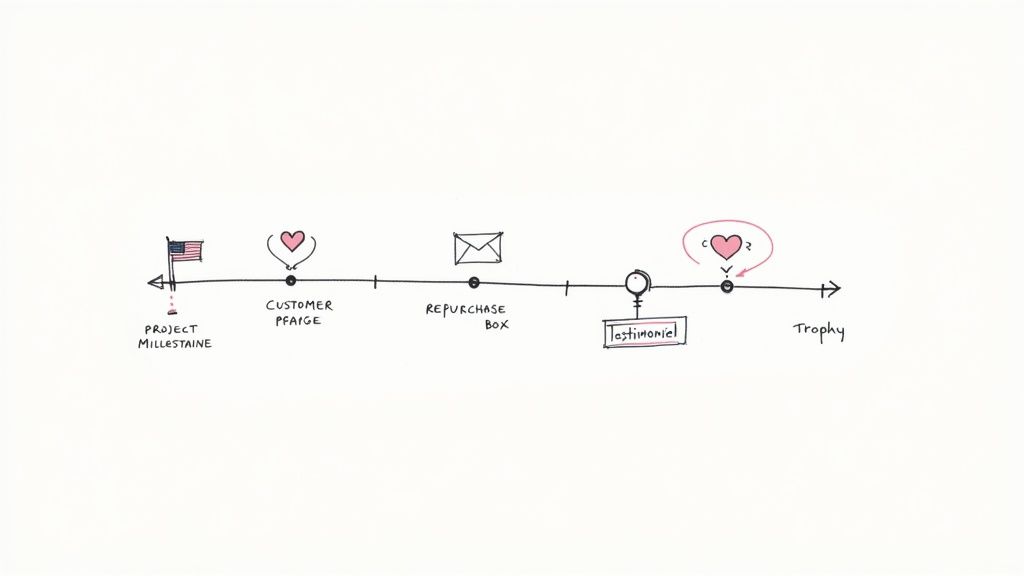
Think about the high points in your customer's journey with you. Those are your golden opportunities. This isn't about sending a generic mass email six months after a purchase; it's about acting on that immediate, positive feeling.
Recognising Key Moments
You need to look for specific triggers that signal a happy customer who is primed to give feedback. The best time to ask is always right after you've delivered real, tangible value.
These moments could be:
- Project Milestones: You’ve just completed a significant phase of a project, and the client can't stop telling you how pleased they are.
- Positive Feedback: A customer sends an unprompted email raving about your support team or a feature they love.
- Repeat Purchases: A customer buying from you again is one of the clearest signs of trust and satisfaction you can get.
- Achieved Results: For a SaaS company, this is gold. It’s that moment a client tells you they’ve just hit a new KPI using your software.
- Social Media Praise: An e-commerce brand sees a customer tag them in a glowing Instagram post. That's your cue.
Here’s one of the most powerful yet overlooked moments: right after you've successfully solved a problem for them. It sounds counterintuitive, but it works. Research shows that companies with excellent customer experience scores are over 30% more likely to get positive word-of-mouth. And since 72% of UK consumers expect immediate service, a speedy, successful resolution leaves them seriously impressed. You can read the full research on the 2025 Customer Experience Index for more on this.
By learning to spot these organic moments, your request feels less like a marketing task and more like a genuine conversation. That alone will massively boost your chances of getting an enthusiastic 'yes'.
Streamlining this is key. A platform like GoodKudos.com lets you send a request link the second these moments happen, so you can capture all that positive energy before it fades.
Crafting a Request That Gets a Response
How you ask for a testimonial is just as crucial as when you ask. Think about it: a generic, robotic email is easy to ignore, isn't it? But a personal, thoughtful message? That makes your customer feel seen and valued, making them far more willing to share their story.
The secret is to make saying "yes" incredibly simple and following through even simpler. This means ditching vague pleas like "leave us a review" and, instead, making the process feel like a natural conversation, not a chore.
A recent 2024 UK Consumer Survey highlights something we’ve seen coming for a while: people now place far more trust in peer reviews and social comments than in traditional brand claims. This shift means testimonials work best when they feel like genuine stories from real people, not corporate-approved soundbites. To get this right, your request needs to feel authentic and casual. You can discover more about what's driving UK consumer behaviour and see how this impacts trust.
Guiding Your Customer to the Best Story
Let’s be honest, most happy customers are happy to help, but they often freeze up when faced with a blank text box. "What should I write?" is a common thought. That blank page can be seriously intimidating. You can help them tell a more powerful and specific story by asking a few thoughtful, open-ended questions.
These prompts help them recall the real value you provided and put it into their own words:
- What was the single biggest challenge you faced before working with us?
- What specific result or outcome made you the happiest?
- How has our product or service made your life easier or your business better?
- What would you tell someone who’s on the fence about our solution?
By nudging them with these questions, you're not putting words in their mouth. You’re simply helping them focus on the details that make a testimonial compelling and relatable.
Your goal is to make providing feedback feel effortless. When you remove the friction and guesswork, you dramatically increase the chances of receiving a high-quality, impactful story that resonates with future customers.
It's helpful to see what this looks like in practice. A generic request often feels like a chore, while a personalised, specific one feels like a valued conversation.
Effective vs. Ineffective Testimonial Request Phrasing
| Ineffective Phrasing (Low Impact) | Effective Phrasing (High Impact) |
|---|---|
| "Leave us a review." | "Would you be open to sharing your story about how our software helped you cut down on admin time?" |
| "We'd love your feedback." | "I was so thrilled to hear you landed three new clients last month! Would you mind sharing a few words about that experience for our website?" |
| "Rate your experience." | "Could you record a quick 30-second video about what you loved most about the project? We'd love to feature you on our social media." |
| "Click here to review us on [Platform]." | "We're trying to gather more feedback on [Platform]. If you have a moment, could you share what made you choose us over other options?" |
The difference is clear. The high-impact examples are specific, personal, and give the customer a clear starting point.
Be Clear About What You Need
Finally, be upfront about the type of testimonial you’re looking for. Do you need a written quote for your website’s homepage? A star rating on a specific review platform? Or maybe a short video clip for your social media feed?
Being specific sets clear expectations and helps you get the exact format that will have the most impact for your marketing.
Managing all these different requests can get complicated, fast. Using a dedicated platform like GoodKudos.com lets you send a single, simple link where customers can easily submit written reviews, record video testimonials, and share their success stories without any hassle. It organises the whole process for you and makes it completely frictionless for them.
Choosing the Right Channel for Your Request
Knowing how and when to ask for a testimonial is half the battle. The other half? Choosing the right place to ask. If you want to dramatically increase your chances of getting a response, you have to meet your customers where they already are.
Your choice of channel should feel like a natural part of your conversation, aligning with your relationship and their preferred way of communicating.
For many businesses, a personalised email is the default. It works well because you can add context, include a few guiding questions, and create a direct, one-to-one connection. The real trick is a subject line that actually gets opened, something like, "A quick question about your experience with [Product Name]".
But email isn't your only play. Different channels are better suited for different moments.
Aligning Your Request with the Customer Journey
Think about the natural high points in a customer's experience. That's your moment.
- Post-Purchase Pages: For e-commerce brands, this is prime real estate. Right after a customer buys something, their excitement is at its peak. A simple, low-friction request on the order confirmation page is a brilliant way to capture that initial positive buzz.
- Social Media: When a customer tags your brand in a glowing post, that’s your cue. Don't let it just sit there. Engage with them directly and publicly, then slide into their DMs with a follow-up. You could say something like, "We're so glad you love it! Would you be open to us featuring your post on our website?"
- A Personal Phone Call: This one is gold for high-value B2B clients or long-term partners. A quick, personal call shows you genuinely value their opinion and reinforces the strength of your professional relationship. It feels less like a marketing task and more like a partnership check-in.
This infographic breaks down the essential anatomy of any successful testimonial request, no matter where you make it.
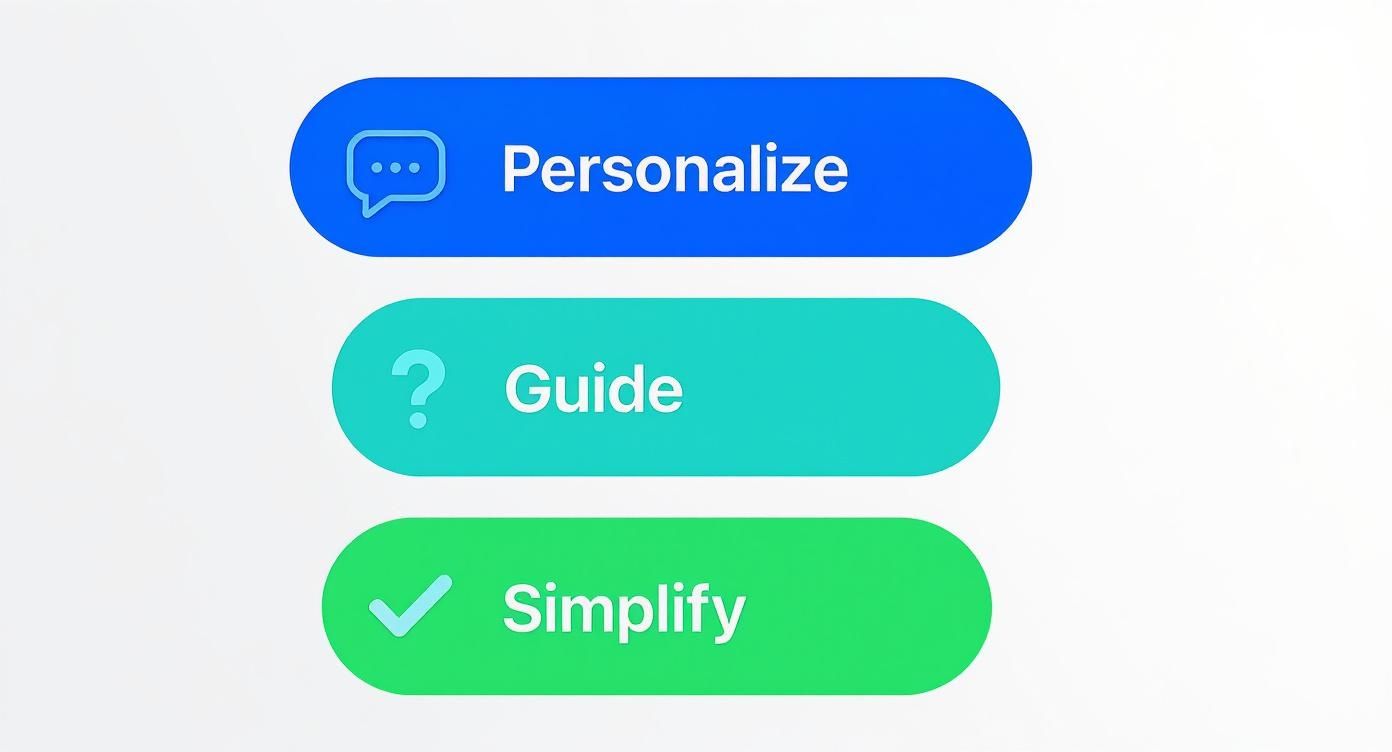
As you can see, a great request is always a blend of personalisation, clear guidance, and simplicity. It’s about making it easy for them to say yes.
The goal is to make the request feel like a natural extension of the customer experience, not a separate marketing task. The more convenient you make it, the more likely they are to respond.
Modern customer journeys are rarely linear. In fact, 26% of customers use more than one channel to interact with a business, which really highlights the need for a seamless, multi-channel approach. Research shows that customer satisfaction is deeply linked to feeling cared for, which directly influences how willing they are to share positive feedback. You can discover more insights from the UK Customer Satisfaction Index to see just how strong this connection is.
Trying to manage requests across email, social media, and your website can get messy fast. A dedicated platform like GoodKudos.com simplifies all of this by giving you one central hub to collect and manage feedback, making the whole process effortless for both you and your customers.
Putting Your New Testimonials to Work
Successfully asking for testimonials is a huge win, but a fantastic story sitting in your inbox has zero value. The real magic happens when you strategically place that social proof in front of potential customers to build confidence and overcome their biggest objections.
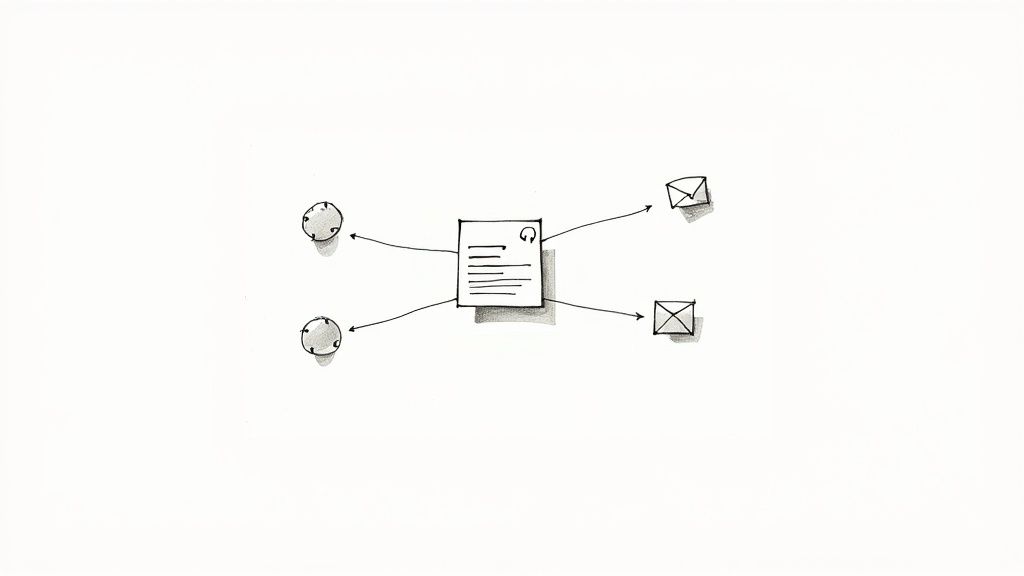
Think beyond just a single testimonials page. Your goal is to sprinkle these powerful stories at every critical decision point in the customer journey. This means placing them where they will have the most impact.
Maximising Your Social Proof
To get the most out of every single review, you need a plan for showcasing and repurposing them. A single glowing testimonial can become a powerful, versatile marketing asset.
Here are some high-impact places to feature your testimonials:
- On Your Homepage: Position a powerful quote "above the fold" to immediately build credibility with new visitors.
- Product or Service Pages: Place relevant testimonials next to the specific offerings they endorse to answer potential questions and reduce hesitation.
- Checkout Flows: A well-placed review here can be the final nudge a customer needs to complete their purchase, reassuring them they’re making the right choice.
- Email Signatures: Add a short, impactful quote to your signature for a subtle yet constant stream of social proof in every email you send.
Repurposing a single testimonial into multiple assets—like social media graphics, email snippets, and case studies—multiplies its reach and reinforces trust across all your marketing channels.
A consistent system for collecting and using testimonials is one of the most cost-effective growth strategies you can implement. To turn your happy customers into your best marketing asset, you need a streamlined process. Platforms like GoodKudos.com are designed to help you start collecting powerful testimonials and showcasing them effortlessly.
Common Questions (and Straightforward Answers)
Even with the best strategy, a few questions always pop up when you start asking for testimonials. I've seen these trip people up time and time again, so let's get them answered so you can move forward with confidence.
How Many Times Should I Follow Up?
Keep it simple: follow up just once.
A single, friendly reminder sent 3-5 business days after your first email is the sweet spot. Anything more starts to feel like nagging, and that's not the vibe you want. Your goal is to capture genuine excitement, not to pressure someone into giving a half-hearted review.
If you don't hear back after that one gentle nudge, let it go. It's better to focus your energy on other happy customers who are ready to share.
Is It Okay to Offer an Incentive?
This is a tricky one, and you have to tread carefully.
Offering a small thank you—like a discount on a future purchase or entry into a prize draw—is generally fine. The key is transparency. You're rewarding them for their time, not buying a good review.
Never, ever offer direct payment for a positive review. This is a huge red flag for customers and can even get you in trouble with major review platforms. A much better approach is to send a surprise thank-you gift after they’ve submitted their feedback.
This way, you're showing genuine appreciation for their effort without influencing what they say. It keeps the testimonial authentic and your reputation intact.
What Should I Do If I Get a Negative Review?
First off, don't panic. And definitely don't delete it.
A negative review is actually a golden opportunity to show everyone watching just how great your customer service is. The trick is to respond quickly, publicly, and with grace.
Here’s a simple game plan:
- Thank them for their feedback. Seriously. They took the time to write it.
- Acknowledge their problem without getting defensive. A simple, "We're sorry to hear this was your experience," works wonders.
- Take it offline. Offer to make things right by asking them to email or call you directly.
This public response shows potential customers that you listen, you care, and you’re committed to making things right. That builds more trust than a page full of five-star ratings ever could.
How Long Should a Testimonial Be?
Forget word counts. Think impact.
The most powerful written testimonials are often just a couple of punchy sentences. They zero in on a specific problem and a concrete result. That's it.
For video, the sweet spot is usually around 30-60 seconds. Long enough to tell a story, but short enough to keep attention. Quality and authenticity will always beat quantity. A few guiding questions can help your customers deliver the kind of focused, potent feedback that truly connects.
Ready to stop guessing and start collecting powerful customer stories? Good Kudos makes it incredibly simple to gather, manage, and showcase written and video testimonials that build trust and grow your business. Start collecting testimonials for free today at GoodKudos.com.