How to Request Feedback for Real Growth
Let's be honest, asking for feedback can feel a bit awkward. Most of us tend to wait for that once-a-year performance review, passively hoping for a few nuggets of wisdom to guide our growth for the next twelve months.
But what if that whole approach is holding you back?
The most successful people I know don't just sit and wait; they actively hunt for input. It’s the difference between being a passenger and taking the driver's seat in your own career.
Why Proactively Asking for Feedback Is a Career Superpower
Picture this: two colleagues have just wrapped up a major project. One of them waits for their manager's scheduled review. The other, however, shoots their manager a quick message: "Hey, got a minute? I'd love your thoughts on how the client kickoff went. Was my explanation of the timeline clear, or is there anything I could have done to make it smoother?"
Who do you think is going to grow faster?
Accelerate Your Professional Growth
That second person isn't just showing initiative; they're creating a powerful, continuous growth loop. When you get into this habit, feedback stops being a formal, annual event and becomes a real-time development tool.
Here’s what happens:
- You improve faster. Small issues get addressed before they turn into bad habits, and you get to refine your skills on the fly.
- You build stronger relationships. It shows you're committed to your work, which builds a massive amount of trust and respect with your managers and peers.
- You become more self-aware. It’s tough to see our own blind spots. Proactive feedback gives you an objective view of your performance that you’d otherwise miss.
The infographic below really drives home the difference between passively waiting and actively asking.
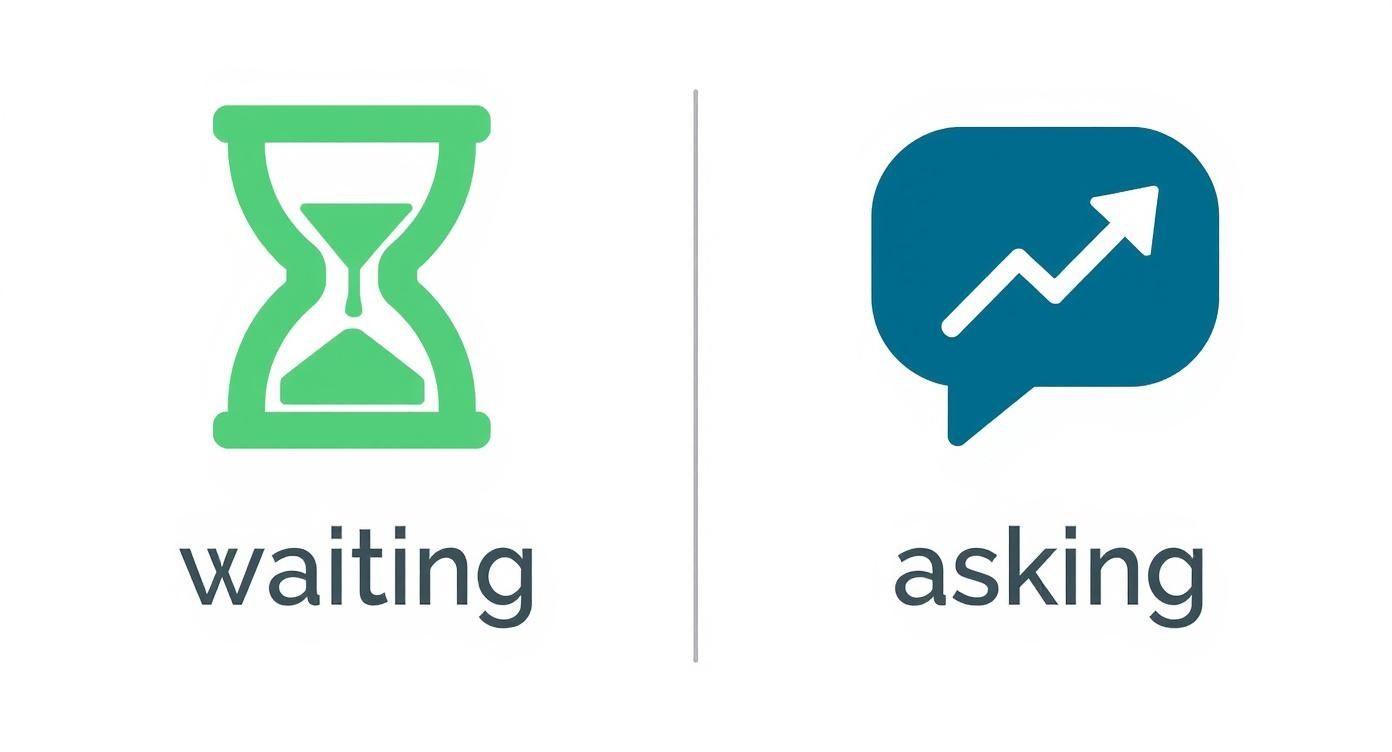
As you can see, taking charge of feedback completely changes your career trajectory, turning small insights into immediate opportunities for improvement.
This isn't just theory. The rest of this guide gives you the exact playbook for making feedback your most valuable professional asset. And if you want to get serious about this, platforms like Good Kudos can help formalise the process, making it much easier to collect and organise all those valuable insights.
Laying the Groundwork for Feedback That Actually Helps

Let's be honest: great feedback rarely just happens. Before you even think about asking for someone's opinion, a little prep work can make all the difference. It's what turns a vague "good job" into the kind of specific, actionable advice that helps you grow.
This preparation is more important than you might think, especially given the feedback gap in many workplaces. For instance, in the UK, a surprising 65% of employees say they want more feedback than they're currently getting. And when they do get it, the results speak for themselves: 85% of employees take more initiative, and companies with regular feedback see turnover drop by nearly 15%. You can dig deeper into these UK employee feedback insights to get the full picture.
So, how do you set yourself up to get the good stuff?
First, Know What You’re Asking For
Before you approach anyone, get crystal clear on what you actually want feedback on. A broad request like, "How am I doing?" is tough to answer well. It puts the other person on the spot and often results in generic praise.
Instead, narrow your focus to a specific event, skill, or piece of work.
Are you looking for input on:
- How you handled the Q&A after yesterday's team presentation?
- The clarity of the introduction in that report you just sent over?
- Your approach to leading the weekly project stand-up?
Being specific gives the other person a clear target. It helps them provide relevant, detailed insights rather than just trying to be nice.
The more specific your request, the more specific and useful the feedback will be. It transforms the conversation from a general check-in to a focused problem-solving session about your performance.
Choose the Right Person and the Right Moment
Next up, think carefully about who you ask and when you ask them. They aren't always the same thing.
The best person to give input on your project management skills is probably a teammate who works with you day-in and day-out. On the other hand, your manager might offer a better high-level perspective on your strategic thinking. Match the person to the topic.
Timing is just as critical. Catching someone when they're rushing to their next meeting or visibly stressed is a recipe for a rushed, unhelpful response. Look for a moment when they seem relaxed and have the mental space to give your request the thought it deserves.
This is where a structured platform like Good Kudos can be a huge help. It lets people provide thoughtful feedback on their own schedule, when they can actually focus.
How to Frame Your Feedback Request
The way you ask for feedback completely changes the answers you get. Let's be honest, a vague "How did I do?" is a conversation killer. It's lazy, and it rarely gets you the kind of insight that actually helps you improve.
Your real goal is to make it easy for the other person to give you specific, constructive advice. Framing your request thoughtfully shows you respect their time and are serious about getting better. This is a bigger deal than you might think, especially here in the UK. Research shows that while nearly 43% of highly engaged employees get feedback at least once a week, only 20% of UK employees overall can say the same. That's a massive gap. You can read more on the impact of regular feedback on engagement if you want to dig into why closing it matters so much.
Ditch Vague Questions for Specificity
Instead of putting someone on the spot with a massive, open-ended question, anchor your request to something specific. A recent project, a presentation you gave, or even a tricky meeting. This gives them a clear focus and helps them recall concrete examples, which is exactly what you want.
A great way to structure this is in two parts:
- Start with the positive: "What part of that worked well for you?" This gets the ball rolling on a constructive note.
- Then ask for improvement: "And what's one thing that could have been even better?" This opens the door for an honest critique without feeling like an attack.
For example, after a client presentation, please don't ask, "Was my presentation okay?" You're just begging for a polite "yes" and nothing more.
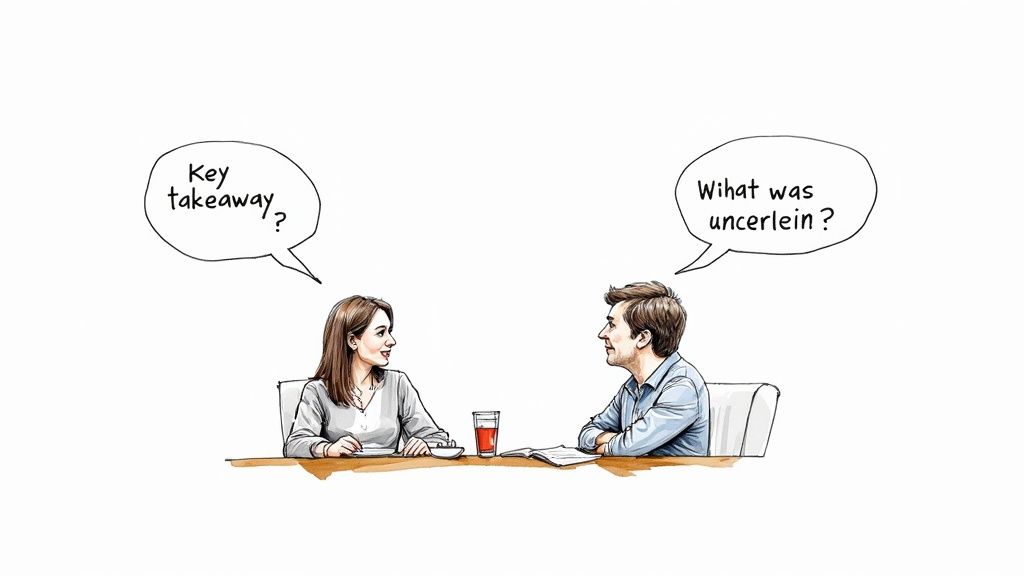
A much better approach is to ask something like, "What was the key takeaway for you from my presentation, and was there any part that felt less clear?" This invites a real dialogue, not just a pat on the back.
The table below shows just how big a difference a small change in wording can make.
Effective vs Ineffective Feedback Questions
| Instead of This Vague Question | Try This Specific Question |
|---|---|
| How did I do? | What's one thing I did well in that meeting, and one thing I could improve for next time? |
| Was my presentation okay? | Which part of the presentation was most compelling, and where did I lose your attention? |
| Any feedback for me? | Thinking about the project launch, how could I have better supported the team? |
| Do you have any concerns? | For the next report, what’s one change that would make the data clearer for you? |
See the pattern? Specificity gives people something tangible to respond to, leading to far more useful advice.
Use Forward-Looking Phrasing
Here’s a great little trick: frame your questions around the future. This instinctively makes the feedback feel less like a critique of the past and more like a collaborative plan for what's next. It shifts the dynamic entirely. People are much more comfortable offering advice when it’s positioned as helpful guidance for the future.
Here are a few examples of what this sounds like in practice:
- "Moving forward, what’s one thing I could do differently to make our team meetings more efficient?"
- "For the next project report, what’s one change that would make the data clearer for you?"
- "Thinking ahead, how could I have better supported the team during that difficult phase?"
This technique doesn't just get you better advice; it actually strengthens your professional relationships by showing you’re focused on growth.
And if you want a more structured way to manage these conversations, platforms like Good Kudos are perfect for collecting and organising this kind of valuable input over time, so nothing gets lost.
Turning Feedback Into Actionable Growth Steps
Getting someone to give you honest feedback is only the first half of the battle. The real magic happens in what you do next—how you react, process, and follow through is what separates stagnation from real professional growth.
Let’s be honest, hearing constructive criticism can sting a little. It’s a completely natural human reaction to feel defensive. The skill isn’t about not feeling that way, but learning to manage that initial impulse.
The trick is to consciously shift your mindset from defending to listening. Before you even think about responding, just take a breath. Your immediate goal isn’t to justify your actions, but to genuinely understand their perspective. This is where active listening becomes your superpower.
From Hearing to Understanding
To make sure you’re getting the complete picture, you need to ask clarifying questions. The key is to frame them in a way that invites more detail without sounding like you’re cross-examining them.
Instead of a defensive, "I don't do that," try an open-ended question like, "That’s interesting, could you give me an example of when you’ve seen me do that?" It shows you’re engaged and taking them seriously.
Once they've shared their thoughts, take a moment to summarise what you’ve heard. Something as simple as, "Okay, so what I'm hearing is that I could be more direct in our team meetings, especially when deadlines are getting tight. Have I got that right?" does two brilliant things: it confirms you've understood and it makes the other person feel genuinely heard.
The goal of receiving feedback isn't to agree with every single point. It's to understand the other person's perception. That perception is valuable data, regardless of whether you think it's 100% accurate.
Creating a Simple Action Plan
Now for the part that actually matters: turning that conversation into concrete action. You don’t need a complicated, multi-page development plan. Just pull out two or three clear, achievable steps from the feedback you've just received.
- Example Action 1: "I'll prepare one key talking point before our next weekly stand-up to practise being more concise."
- Example Action 2: "For the next client report, I'm going to ask a colleague to quickly review the summary for clarity before I send it out."
Finally, and this is a step most people miss, you need to close the loop. A few weeks down the line, circle back to the person who gave you the feedback. Give them a quick update on what you’ve been working on.
This simple act shows you were listening and valued their input, making them far more likely to offer you valuable insights again in the future. A platform like Good Kudos is perfect for centralising this whole process, ensuring that great advice never gets lost in the shuffle.
Using Technology to Build a Feedback Culture
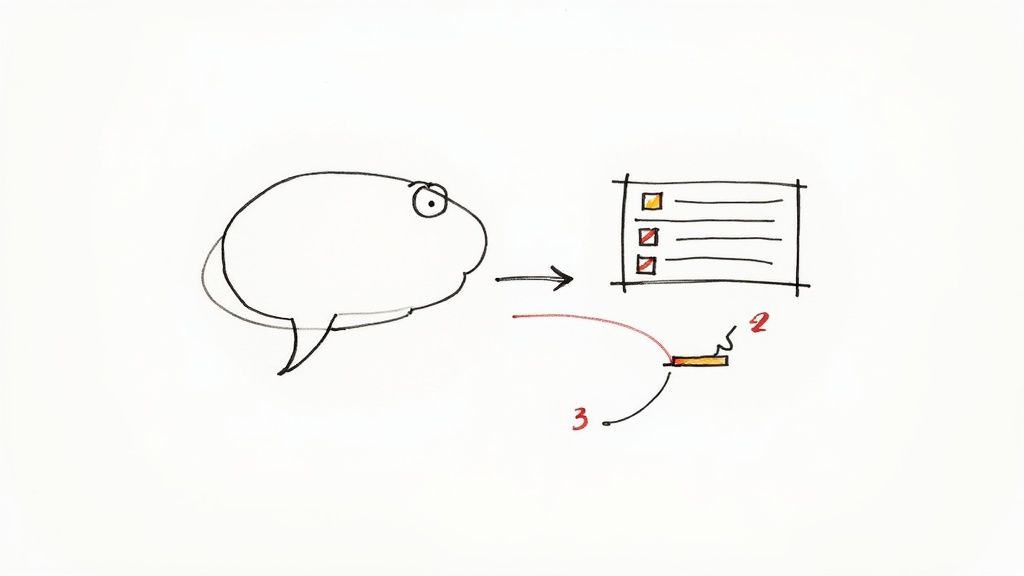
Relying only on face-to-face check-ins for feedback is a bit like trying to navigate with an outdated map. In today’s fast-paced world, brilliant opportunities for growth and improvement can easily get lost in the gaps between scheduled meetings.
This is where the right tech makes a huge difference. It can turn feedback from a formal, once-a-quarter event into a continuous, natural part of your team's daily workflow, taking all the friction out of the process.
Tools designed for this create a central hub where both recognition and constructive input can be shared in the moment. The impact is massive. Research shows that employees who receive regular feedback are 2.8 times more likely to be engaged, and a staggering 84% of UK workers say recognition greatly affects their motivation. You can discover more UK engagement statistics to see just how powerful this is.
Streamlining the Feedback Loop
Dedicated platforms do more than just make it easy to request feedback; they create a living record of progress over time. Instead of important conversations disappearing into overflowing email inboxes or messy chat threads, everything is organised in one accessible place.
This approach brings some obvious wins:
- Public Recognition: It gives team members a way to celebrate wins and give credit where it's due, which is a huge morale booster.
- Private Channels: It also carves out a safe space for managers and colleagues to offer specific, constructive advice without an audience.
- Centralised History: Over time, it builds a personal record of growth, making it dead simple to spot patterns and see how far you've come.
By making feedback accessible and straightforward, technology helps build the powerful, consistent loops that drive genuine professional development. It embeds the process directly into the daily routine.
Platforms like Good Kudos are designed to do exactly this, helping you cultivate a thriving feedback culture from the ground up. Find out how you can start collecting valuable feedback with Good Kudos and weave these practices into your own team’s DNA.
Got Questions About Asking for Feedback? We’ve Got Answers.
Asking for feedback can feel a bit awkward at first, but once you get the hang of it, it’s one of the fastest ways to grow. You’re not alone if you have questions about how to do it right. Let’s break down a few of the most common ones that pop up.
How Often Is Too Often to Ask for Feedback?
There's a fine line between being proactive and just being annoying. Nobody wants to be the person who needs constant reassurance.
The key is to tie your requests to meaningful moments. Did you just wrap up a big project, deliver a presentation, or navigate a really tough week? Those are perfect times to ask. It shows you’re focused on the big picture, not just fishing for compliments on daily tasks. Stick to the milestones, and you’ll show you respect everyone’s time.
What if I Just Get a Vague "Good Job"?
Ah, the classic. It’s well-intentioned, but "good job" doesn't give you much to work with when you're genuinely trying to improve. This is your cue to gently probe for more detail.
The trick is to ask a follow-up question that’s super specific. Try one of these:
- "Thanks, I appreciate that! Was there any specific part of the presentation that you felt landed particularly well?"
- "That's great to hear. As I'm thinking about the next one, is there one thing you think could take it from good to great?"
These kinds of questions don't put people on the spot. Instead, they give them a clear path to providing the kind of actionable insight you’re looking for.
Vague feedback is usually a sign that your first question was too broad. A targeted follow-up can get the conversation right back on track.
How Do I Get My Manager to Give Me More Feedback?
If you feel like you’re flying blind, it’s time to be direct—but strategic. Frame your request in a way that highlights the benefit for them. The goal is to show that their feedback will help you perform better, which ultimately makes their job easier.
Position it as a partnership. You could say something like, “I’m really focused on improving my project management skills this quarter. Would you be open to a quick 15-minute chat after the next project wraps so I can get your take on what went well and where I can tighten things up?”
This approach shows you’re taking ownership of your development and makes feedback feel less like a chore and more like a tool for the whole team’s success. For a more structured approach to tracking these conversations, consider using a platform like Good Kudos.
Building a consistent habit of asking for and acting on feedback is a career superpower. With Good Kudos, you can create a simple, central hub to gather all those valuable insights from managers and peers. Start collecting feedback that fuels your growth today at Good Kudos.