
How to Write a Testimonials that Convert
Getting a powerful testimonial isn't just about asking for a five-star rating. It's about guiding your customers to share a genuine story. You want to capture the specific problem you solved for them and the tangible result they walked away with. A truly great testimonial is a mini-story of transformation, not just a generic pat on the back.
Ready to collect powerful testimonials effortlessly? Check out GoodKudos.com.
Why Authentic Testimonials Resonate with UK Customers
In a market flooded with slick advertising, real customer voices are what actually cut through the noise. UK consumers, in particular, have become incredibly discerning and are often sceptical of traditional marketing claims. They actively seek out real-world proof from people just like them before pulling out their wallets.
This isn't just a fleeting trend; it’s a fundamental shift in how people shop.
The numbers don't lie. A staggering 88% of UK consumers now trust online reviews just as much as personal recommendations from friends or family. On top of that, 78% of shoppers actively hunt for reviews before making a purchase, proving just how much they crave that peer validation. You can find more on this in the UK Consumer Survey Report, which really drives this point home.
So, what does this mean for your business? It means a single, authentic story from a happy customer can be far more persuasive than an entire ad campaign. It builds a direct line of credibility that advertising simply can't buy.
The Power of Relatability
An overly polished, corporate-sounding testimonial just feels cold and sterile. It doesn't connect. But when a potential customer reads a story that mirrors their own struggles and goals, it creates an instant spark. They see themselves in the reviewer's shoes and start to believe a similar positive outcome is possible for them, too.
This is exactly why you need to guide your customers to share specific details.
A review that says, "Their service was great!" is nice, but it’s completely forgettable. Contrast that with something like, "As a small charity, managing donations was chaotic. GoodKudos helped us centralise feedback, which boosted our fundraising efforts by 20%." That’s memorable, specific, and incredibly persuasive.
The goal is to move beyond generic praise and capture the essence of the 'before and after' journey. An authentic testimonial doesn't just say a product is good; it proves it by showing the real-world impact.
To make this practical, it helps to understand the core components that turn a simple comment into a compelling piece of social proof. We've broken them down in the table below.
Key Elements of a Powerful Testimonial
This table summarises what transforms a basic comment into a testimonial that truly connects with and convinces potential customers.
| Element | Why It Matters | Quick Example |
|---|---|---|
| The "Before" State | It sets the scene and helps potential customers identify with a problem they're also facing. It creates relatability. | "Our team meetings were always disorganised, and action items would get lost in long email chains..." |
| The Solution | This directly links your product or service to solving their specific pain point. | "...but after implementing [Your Product], we could track everything in one place." |
| The "After" State | This is the payoff. It showcases the tangible, positive outcome and makes the value of your offer crystal clear. | "Now, our meetings are 30% shorter, and everyone knows exactly what they need to do. Productivity is way up." |
| Specifics & Quantifiers | Numbers and concrete details (like percentages, time saved, or revenue gained) make the result feel real and credible. | "We increased our conversion rate by 15% in the first quarter." |
| Authentic Voice | Using the customer's own words, quirks and all, makes the testimonial feel genuine and trustworthy. | "Honestly, I was a bit sceptical at first, but it's been a total game-changer for our little shop." |
Focusing on these elements helps you gather stories that aren't just flattering but are genuinely persuasive. You don't need marketing jargon, just a clear focus on authenticity and results.
And the best part? You can streamline this entire process of collecting and showcasing these stories effortlessly. Ready to start gathering powerful kudos? Explore how GoodKudos.com can simplify everything for you.
How to Ask for Testimonials Without Being Awkward
Let's be honest, asking a client for a review can feel a bit... awkward. It’s almost like you’re asking for a favour.
But it’s time for a mindset shift. You're not just fishing for compliments; you’re giving your happiest customers a stage to share a success story they helped create. The real secret is all in the timing and the approach.
The absolute best time to ask is during a ‘golden moment’—that point in their journey where satisfaction is through the roof. This could be right after they smash a major goal, when they send you a glowing, unprompted email, or just as you wrap up a successful project. Their positive feelings are fresh, and they’re usually more than happy to shout about it.
Making the Request Feel Natural
Personalisation is your secret weapon here. A generic, bulk email asking for a review is just asking to be ignored. Instead, tailor your request to that specific person.
Reference a positive chat you had or a brilliant outcome you achieved together. This instantly shows you see them as a partner in success, not just another number for your marketing.
For instance, ditch the bland "Could you leave us a review?" and try something like this: "I was so chuffed to hear the new system helped you cut down admin time by five hours a week. Would you be open to sharing that experience in a quick testimonial?" It's specific, it's personal, and it's a world away from awkward.
To get those truly knockout testimonials, you need to gently guide your customer. Think of it like a simple story, with a beginning, middle, and end. The infographic below breaks it down perfectly.
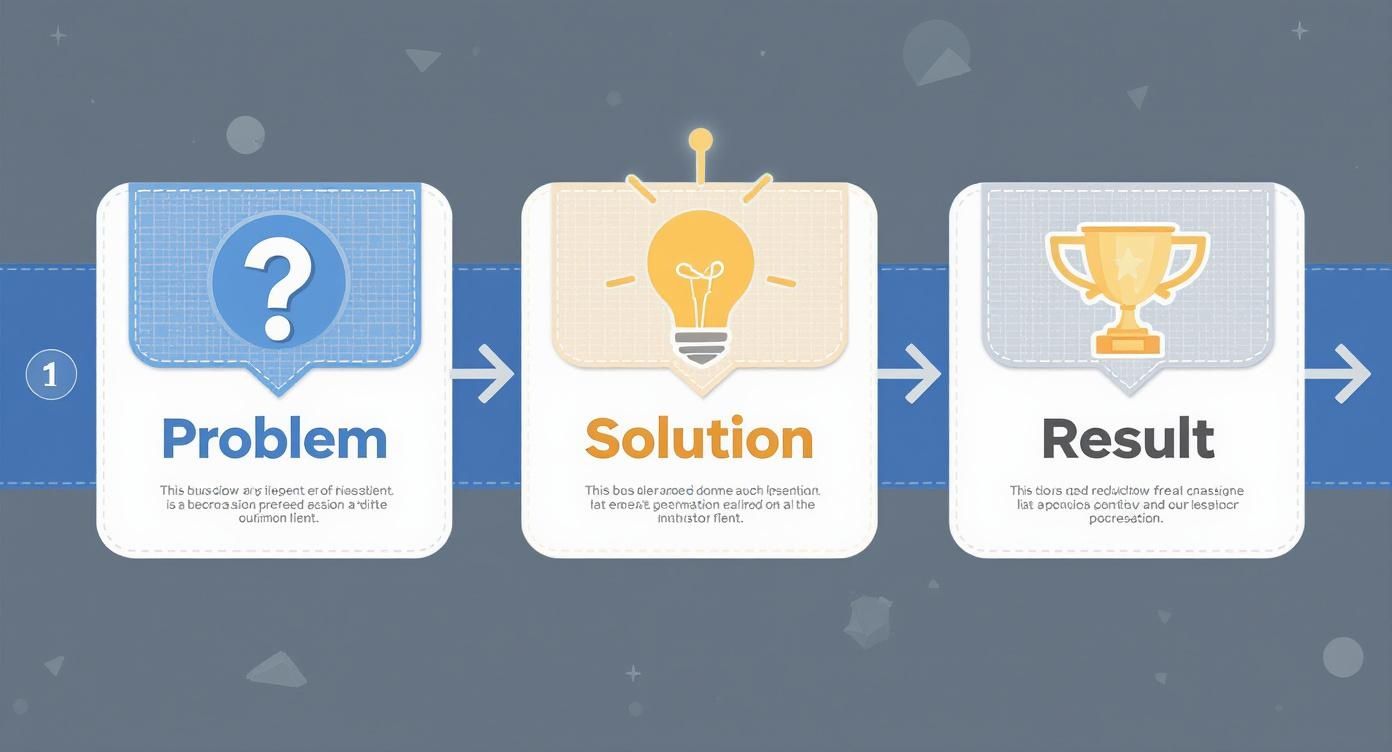
As you can see, every great story starts with a Problem, moves to your Solution, and wraps up with a clear Result. When you ask for feedback, just prompt them to think along these lines.
Simple and Actionable Templates
To make this completely frictionless for your customer, give them a few guiding questions. Open-ended questions work so much better than just asking for a star rating.
Try using prompts like these:
- What was the biggest challenge you were facing before we started working together?
- What was the most significant improvement you noticed after we helped out?
- What specific result are you most proud of?
Pro Tip: Make it ridiculously easy for them to respond. A direct link to a simple form or your reviews page is a must. The fewer clicks it takes, the more reviews you’ll get.
When you nail the timing, personalise your message, and offer clear guidance, asking for a testimonial becomes a natural, positive final step in a great partnership. It’s not about being pushy; it’s about celebrating a win you both created.
And if you want to save a ton of time while making sure you never miss one of those golden moments, automating the process is a game-changer. With a platform like GoodKudos.com, you can send branded, personalised requests and gather incredible stories all in one place, totally effortlessly.
Guiding Customers to Share Compelling Stories
Let's be honest, praise like "they're a great company" is nice to hear, but it won’t persuade anyone to pull out their wallet. The most powerful testimonials aren't just compliments; they're relatable stories that show a clear transformation.
To get those stories, you have to guide your customers. Instead of a vague "Could you leave a review?", you need to ask questions that encourage them to tell their story. This simple shift turns a generic review into a persuasive asset that answers the unspoken questions your ideal clients are asking.
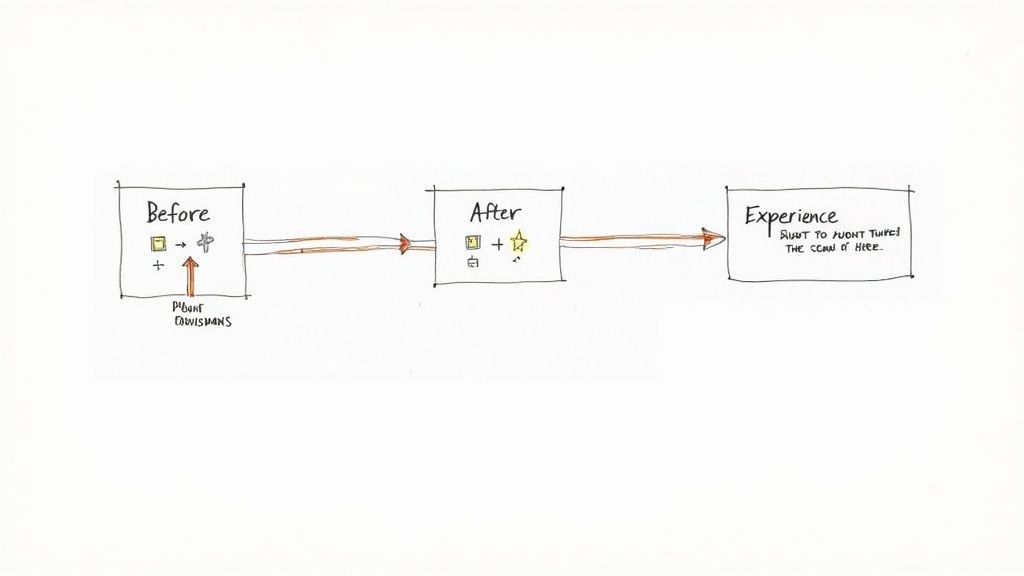
The Before, After, and Experience Framework
There’s a simple but incredibly effective way to structure your request: the ‘Before, After, and Experience’ framework. It helps customers articulate the genuine value you provided by framing their journey in three distinct parts.
This isn’t about feeding them a script. It’s about giving them a mental map that makes it easy to recall and share the details that actually matter.
Think of it as a mini case study, told entirely from their perspective. It’s authentic, benefit-driven, and far more compelling than a five-star rating with no context.
By guiding your customers to recount their journey, you help them articulate the specific problem they faced, the tangible results they achieved, and what it was really like working with you. This is the secret to getting testimonials that truly sell.
Asking the Right Questions
To make the framework sing, you need to phrase your questions carefully. Your goal is to prompt detailed, story-driven responses, so open-ended questions are your best friend here. They invite much more than a one-word answer.
Here are a few examples you can adapt, broken down by each stage of the framework:
The 'Before' State
This part sets the scene. It establishes the problem and creates an immediate connection with potential customers facing the exact same challenges.
- "What was the main challenge you were dealing with before you found us?"
- "Could you describe the situation that made you realise you needed a solution?"
- "What wasn't working in your previous approach?"
The 'After' State
This is where the magic happens. The focus here is on tangible, positive outcomes and the real-world impact your solution had.
- "What specific result or improvement have you seen since we started working together?"
- "How has this solution made your day-to-day work or life easier?"
- "What’s the biggest positive change you’ve experienced?"
The Overall Experience
This final part adds a human touch, building trust and highlighting what it’s like to work with you on a personal level.
- "What was it like working with our team?"
- "Was there anything that surprised you about the process?"
- "What would you say to someone who is considering working with us?"
By asking these types of questions, you’re not just asking for a testimonial; you’re co-creating a powerful marketing story. This approach makes your customer feel heard and valued, while giving you the detailed, benefit-rich content that builds unbreakable trust.
Want an even easier way to collect these compelling stories? GoodKudos.com simplifies the entire process, letting you gather powerful video and text testimonials in one organised place.
Polishing Your Testimonials for Maximum Impact
You've done the hard work of collecting raw, honest feedback from your customers. That’s a huge win, but the job isn't quite finished. Now comes the art of ethically editing and formatting that feedback into a powerful story that grabs attention and builds real trust.
The secret is to polish the text for clarity and punchiness while keeping the customer’s original voice completely intact. You’re not trying to change their message; you're just making sure it lands with the impact it deserves.
This might mean trimming a long, rambling paragraph, fixing a couple of typos, or restructuring the text to make it easy to skim. A bit of thoughtful editing can take a nice comment and turn it into an unforgettable asset.
Keep It Authentic, Make It Shine
Think of yourself as a sculptor. You’re not creating something from scratch; you’re chipping away the excess marble to reveal the masterpiece that’s already there. A great way to start is by finding the single most powerful sentence or phrase in the feedback. This often makes for a perfect headline or a standout pull-quote.
From there, it’s all about readability. Break down those dense walls of text into shorter, more digestible sentences. A little bit of smart formatting can guide your reader’s eye and make sure the most important points pop.
- Bold the good stuff: Emphasise specific outcomes or emotional wins, like "saved us 10 hours a week" or "the process was completely stress-free."
- Use bullet points: If it's a longer story, break it down into a scannable list that walks people through the problem, your solution, and their amazing results.
- Add a human touch: Always include the customer’s name, their company (if it makes sense), and a professional photo. It instantly boosts credibility.
Here's the most important rule of all: always get the customer’s final approval before you publish anything. Just send them the polished version and ask, "Does this still feel right and accurately reflect your experience?" It’s a simple step that keeps trust high and ensures you’re representing them faithfully.
Specifics Sell, Vagueness Doesn't
Vague praise like "they're a great company" feels nice, but it doesn't really persuade anyone. What truly convinces potential customers are the specific, juicy details. The authenticity and quality of a testimonial are what make it work.
Consider this: a recent study found that 72% of UK consumers are far more likely to trust testimonials that get into the nitty-gritty of the experience, like the exact product used or the specific outcome. On top of that, testimonials with real names and locations are seen as 45% more credible than anonymous, generic ones. You can dig deeper into the impact of customer service on consumer trust to see just how critical this is.
This all points to one thing: you need to highlight concrete results. Whenever you spot numbers or specifics in the feedback, pull them out. Turn a generic "It helped us grow" into a powerful "It helped us increase client bookings by 30% in just three months." That kind of detail feels real, making the claim—and your business—far more believable.
By applying these simple editing and formatting principles, you can create testimonials that are not only a breeze to read but are also packed with the persuasive punch needed to turn curious prospects into loyal customers.
Ready to show off your perfectly polished testimonials? With GoodKudos.com, you can create a beautiful, branded wall for your best stories in just a few clicks.
Showcasing Testimonials Where They Matter Most
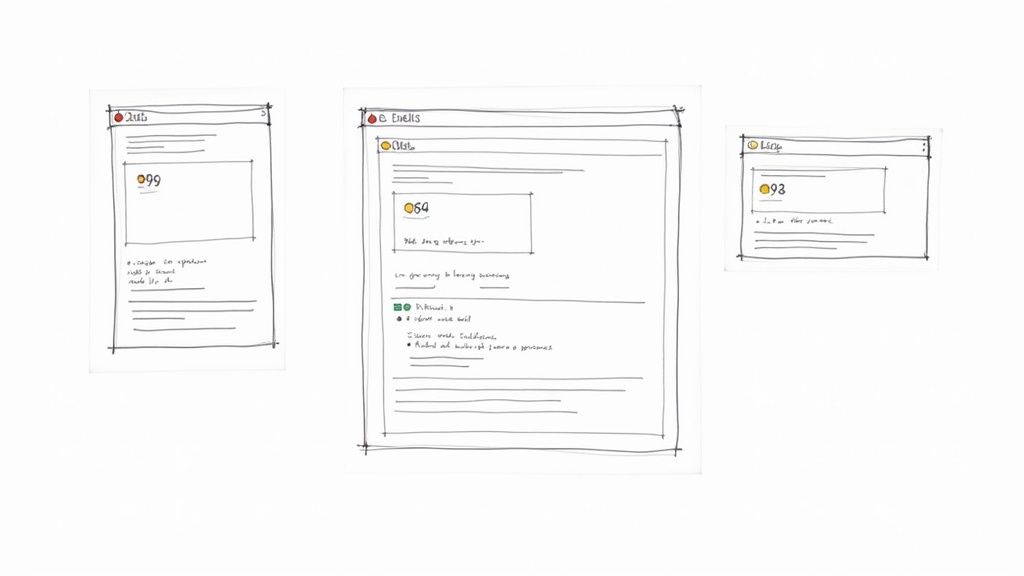
Collecting powerful customer stories is only half the battle. The real magic happens when you place those stories exactly where your potential customers are looking for a nudge of reassurance. If you want to turn testimonials into active conversion drivers, you have to move beyond a standard ‘reviews’ page.
Strategic placement is all about context. It’s about matching the right story to the right moment in your customer's journey, addressing their specific doubts and questions at the perfect time.
Weaving Social Proof into the Buyer Journey
Think about the path a potential customer takes. They don't just land on a testimonials page and suddenly decide to buy. They explore your product features, weigh up your pricing, and look for proof that you can solve their specific problem.
By embedding relevant testimonials directly into these key areas, you serve up social proof exactly when it’s needed most. A story about incredible value on your pricing page is far more potent than one buried in a long, generic list of reviews.
Here are a few high-impact locations to consider:
- Product & Service Pages: Place a specific testimonial right next to the feature it raves about. If a customer loves your easy setup, put that quote right next to your "Getting Started" section.
- Pricing Sections: Add a review that zeroes in on return on investment or affordability. A quote like, "The best money we've ever spent on our business," can be the final push someone needs.
- Landing Pages: Use your most powerful, benefit-driven story right at the top of the page to immediately build trust with new visitors.
- Email Campaigns: Drop a short, punchy quote into your nurture sequences to reinforce your value proposition over time.
This contextual approach ensures your social proof isn’t just seen, but felt. It becomes a core part of your sales narrative, actively helping to overcome objections and build confidence at every single touchpoint.
Matching the Format to the Platform
The format of your testimonial is just as important as where you put it. A short, snappy text quote is perfect for a social media graphic, while a detailed video can bring a customer’s story to life on your homepage.
This is especially true in the UK market. Recent research shows that a huge 80% of UK consumers prefer to see testimonials directly on a product page rather than on a separate reviews section. What's more, testimonials that include photos or videos are 53% more likely to be read and trusted by UK buyers.
Choosing the right format is about meeting your audience where they are. A quick, scannable quote works wonders for a busy professional, while an in-depth video might be perfect for someone making a more considered purchase.
Ultimately, showcasing your customer stories effectively means weaving them into the very fabric of your marketing. By placing the right story, in the right format, at the right time, you transform passive praise into an active, persuasive force.
To effortlessly collect and showcase these powerful stories, check out how GoodKudos.com can help you build a stunning, branded wall for your best feedback.
A Few Common Questions About Writing Testimonials
Once you start getting serious about your testimonial strategy, you’re bound to run into a few common questions. Let's tackle them head-on so you can keep your process moving smoothly and with confidence.
Think of this as your go-to FAQ for collecting and showcasing customer stories.
How Long Should a Good Testimonial Be?
There’s no magic word count, but for a text testimonial, the sweet spot is usually between 30 and 100 words. A short, punchy sentence can be gold for a social media graphic, while a longer paragraph tells a more complete story on a dedicated page or in a case study.
The real goal here is impact, not length. You want testimonials that clearly spell out a specific problem, how you solved it, and the tangible result. For video testimonials, aim for 60-90 seconds. That’s just enough time to deliver a persuasive message without losing your viewer's attention.
What Should I Do with a Negative Review?
It might feel like your first instinct is to hide it, but a negative review is actually a golden opportunity to show off just how good your customer service is. The key is to always respond publicly and professionally.
Acknowledge their issue, apologise for their experience, and offer to take the conversation offline to resolve it. This simple act shows potential customers that you take all feedback seriously and are committed to making things right. Internally, of course, you should use that feedback to fix the underlying problem. A business that handles criticism with grace often builds more trust than one that only ever shows perfect five-star reviews.
Is It Okay to Offer Incentives for Testimonials?
This is a delicate one, so you need to tread carefully. Offering a small, transparent incentive for an honest review—like a discount on a future purchase or entry into a prize draw—is generally okay. The line you can't cross is paying for an explicitly positive review. That destroys credibility and can get you into hot water with consumer protection laws in the UK.
The focus should always be on encouraging feedback, not dictating its content. Honestly, the best approach is to provide an experience so remarkable that your customers can’t wait to share their praise without any prompting at all.
What Is the Easiest Way to Collect and Manage Testimonials?
Trying to wrangle testimonials through a mess of emails and spreadsheets is a recipe for a headache. It gets messy and inefficient, fast. A dedicated platform is a much better way to handle the whole process.
Tools like GoodKudos.com are built to streamline everything from start to finish. You can send automated, branded requests, gather all your feedback in one central dashboard, and showcase your best testimonials on your website with slick, professional widgets. It saves a huge amount of time and ensures your hard-won social proof always looks its best.
Streamlining your testimonial collection is the key to building consistent social proof. GoodKudos.com simplifies the entire process, allowing you to gather and display powerful customer stories with zero hassle. See how it works.