
Mastering Video Case Study Production
Let’s be honest. Nobody trusts a generic ad anymore. Polished marketing claims and corporate jargon? They just blend into the background noise. If you really want to build trust and get people to act, you need to harness the power of authentic customer stories.
That’s what effective video case study production is all about. It’s the difference between telling prospects you’re great and letting a happy customer prove it for you. Ready to turn your customer success into your best marketing asset? See how Good Kudos makes it simple.
Why Authentic Customer Stories Just Work
We live in a world saturated with advertising, and as a result, potential buyers have their guard up. They’ve become experts at tuning out corporate messaging and are actively looking for genuine proof instead. This is where a well-produced video case study completely changes the game.
Instead of broadcasting your own claims, you’re handing the microphone to someone who has already found success with your product or service.
That simple shift is incredibly powerful. Hearing a peer—not a salesperson—endorse a solution provides a layer of social proof that traditional marketing can't even touch. People trust recommendations from others like them far more than branded content, making these stories one of your best tools for overcoming a buyer’s hesitation.
It’s All About the Emotional Connection
Here’s something a written case study can never quite capture: pure, unscripted emotion. A video doesn't just present facts and figures; it shows your customer's enthusiasm, their relief, and their newfound confidence.
Viewers see the genuine expression on a client's face as they describe how you helped solve a massive headache for them. This creates an emotional connection that builds trust on a much deeper level.
Instead of just processing data, your audience feels the story. That emotional resonance makes your message stick, turning passive viewers into engaged prospects who feel like you truly understand their problems.
Building Credibility You Can’t Fake
Authenticity is the secret sauce of a great video case study. A real customer, speaking in their own words, from their own office or home, offers a level of credibility that a scripted ad could only dream of. Their story isn't just a testimonial; it’s a real-world demonstration of your value in action.
This approach directly answers the questions every B2B buyer is thinking:
- Does this thing actually work? Seeing a real company get measurable results is a definitive "yes."
- Will it work for a business like mine? A relatable customer story allows prospects to see themselves in the narrative.
- Can I trust this company? The fact that a client is willing to go on camera for you is one of the most powerful endorsements you can get.
By focusing on the customer's journey—their challenge, their decision, and their eventual win—you transform a piece of marketing into a compelling, believable story.
Mastering video case study production isn't just about having the right camera; it’s about becoming a masterful storyteller. Ready to capture your own customer successes? Good Kudos provides a simple, effective platform to collect and showcase powerful video testimonials. See for yourself how easy it can be.
Your Pre-Production Blueprint for Success
Let's be honest: the final quality of your video case study is pretty much decided before you even think about hitting the record button. If you rush through pre-production, you’re setting yourself up for a flat, uninspired video and a lot of wasted time and money. Think of this stage as laying the foundation of a house. Get it right, and the final product will be strong, compelling, and perfectly aligned with your goals.
The whole thing really comes down to one crucial choice: the customer you put on screen. Not every happy client is going to make a great video subject.
Finding Your Ideal On-Screen Advocate
What you’re looking for is a special mix of ingredients. The perfect person hasn't just seen fantastic, measurable results with your product; they're also a natural communicator. You need someone articulate, genuinely enthusiastic, and comfortable enough to open up and share their story.
As you're thinking about who to approach, keep these points in mind:
- A Compelling Story Arc: Look for a journey with a clear before-and-after. What was the big, relatable problem they were stuck with? How did your solution create a real, impactful change? A story about overcoming a major hurdle is always going to be more engaging than one about minor tweaks.
- On-Camera Presence: Some people just light up on camera, while others clam up. It's a smart move to have a quick, casual video call before you commit to anything. This gives you a feel for their comfort level and helps you see if their personality will click with your audience.
- Tangible Results: The best stories are backed by solid proof. Can they share specific numbers, percentages, or other metrics that show their success? Hard data gives their emotional story a logical backbone that more sceptical viewers need to see.
Once you’ve found your star, it’s time to shape their experience into a proper narrative.
Crafting a Narrative That Connects
A powerful video case study isn’t just a checklist of features; it's a real story. And every great story has a beginning, a middle, and an end. For video case study production, this translates perfectly into the classic problem-solution-result framework.
This structure works so well because it mirrors the journey your potential customers are on. They see their own frustrations reflected in the customer's problem, which makes the solution you're offering feel immediately relevant to them.
Your goal is to script a journey, not just an interview. Guide the viewer through the customer's initial pain points, their 'aha!' moment of discovery, and the ultimate triumph they achieved with your help. This narrative arc makes the final result feel earned and totally believable.
With your story mapped out, you can get down to the practical details that will make the shoot day go smoothly.
Nailing the Pre-Production Logistics
Before you get anywhere near a camera, there’s some essential planning and paperwork to sort out. It's time to create a checklist to make sure you don't miss a thing.
A good pre-production checklist keeps the entire project on track, from initial outreach to finalising the script. It’s your single source of truth, ensuring that both your team and your customer are aligned on the goals, the story, and the practicalities of the shoot.
| Task Category | Key Action Items | Success Metric |
|---|---|---|
| Customer Vetting | Identify 3-5 potential customers with strong results. Conduct informal video calls to gauge on-camera presence. | A confirmed, enthusiastic customer who is comfortable on camera. |
| Story & Narrative | Define the core problem, the solution's impact, and the key results. Draft open-ended interview questions. | A clear narrative arc (Problem-Solution-Result) is approved. |
| Legal & Consent | Draft and send a video release form. Confirm written consent from the individual and their company. | Signed release forms are received and filed before the shoot date. |
| Location & Tech | Scout and confirm a quiet, well-lit location (e.g., the customer's office). Plan equipment needs (camera, lighting, audio). | A suitable location is secured and a tech checklist is finalised. |
| Scheduling | Coordinate and confirm the shoot date and time with all participants. Create a detailed day-of schedule. | The shoot is officially on the calendar for all key stakeholders. |
Working through a checklist like this ensures you're not scrambling at the last minute. It turns a potentially chaotic process into a manageable, step-by-step plan.
One of the first and most important items is getting legal releases sorted. This is non-negotiable. You need written consent from the customer and their company to use their name, likeness, and story for your marketing. Get this done early to avoid any headaches down the line.
The quality expectations for video are also higher than ever. In the UK, the high-end television (HETV) sector has seen huge growth, with a UK spend of £5.3 billion across 300 programmes. This boom, driven by global streaming services, means audiences are used to incredibly high production standards. You can learn more about the evolving UK production market and its trends.
Next up, find a good location. The customer’s own office is often the best bet, as it adds a layer of authenticity. Just make sure the space is quiet, has good light, and visually represents their brand well.
Finally, write your interview questions with care. Ditch the simple yes/no questions. Instead, craft open-ended questions designed to get detailed, emotional answers and those perfect, compelling soundbites.
The infographic below shows how presenting factual success builds the trust you need to bring in qualified leads.
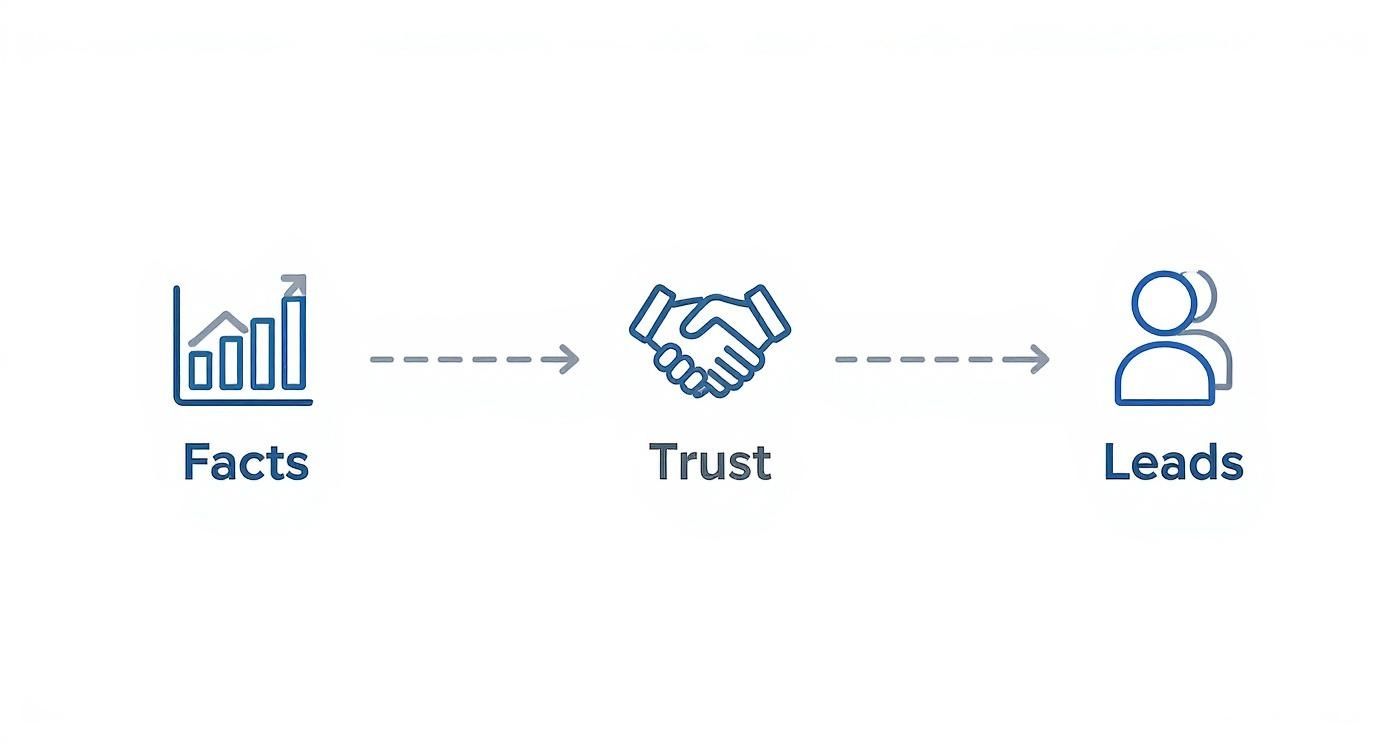
As you can see, credible facts are the starting point. They build the client trust that ultimately drives genuine interest and leads.
A solid pre-production plan is your best defence against costly mistakes. It ensures every element, from the story to the setting, is working towards your end goal.
Ready to make collecting powerful customer stories easier? The platform at Good Kudos helps you gather and showcase video testimonials that build undeniable trust.
Executing a Flawless Production Day
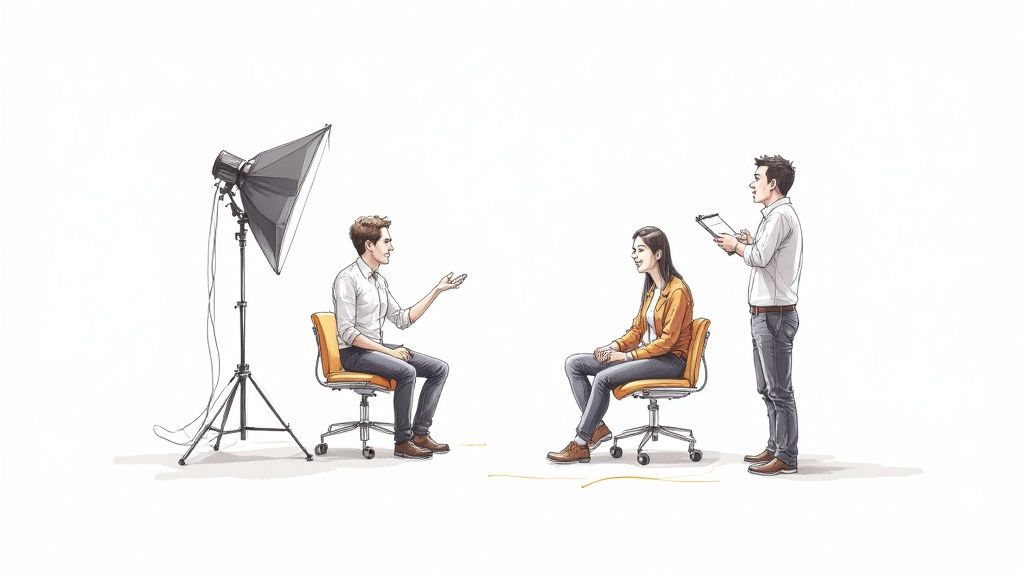
The plans are signed off, your customer is on board, and the gear is packed. This is it—the day all that careful planning gets turned into real, tangible footage. A great production day is a mix of technical skill and emotional intelligence. You're there to capture not just what your customer says, but how they feel.
Your number one job is to make your customer feel completely at ease. Most people aren't used to being on camera, and a set full of lights and lenses can be pretty intimidating. The more comfortable they are, the more genuine and authentic their story will feel on screen.
Start by creating a relaxed atmosphere. Keep the crew small to avoid overwhelming the room. Spend the first few minutes just chatting, offering them a drink, and walking them through what to expect. This isn't just about being polite; building that rapport is how you capture those natural, unscripted moments.
The Art of the Interview
The interview is the heart and soul of your video case study. Your goal isn't just to get answers—it's to guide a conversation that uncovers a compelling story. This is where your open-ended questions come in, acting as a guide rather than a rigid script.
Think of yourself less as an interviewer and more as a collaborative storyteller.
- Ease them in. Start with simple background questions about their company and their role. This helps them warm up and get used to the camera before you dive into the main story.
- Listen more than you talk. Pay close attention to what they're saying. The best insights often come from follow-up questions you hadn't planned. If they mention an interesting detail, gently ask them to tell you more about it.
- Encourage storytelling. Use prompts like, "Talk me through the moment you realised the old way wasn't working," or "What happened right after you implemented our solution?" This encourages narrative-style answers, not just boring facts.
- Embrace the pause. Don't feel the need to jump in the second they finish a thought. Giving them a few seconds of silence can often lead to them adding a final, powerful thought they might have otherwise held back.
A great interview feels natural because it is. Your role is simply to be a curious, encouraging guide who helps them put the value they've received into their own words.
The magic of a fantastic video case study lies in those unscripted moments of authenticity. When a customer forgets the camera is there and simply speaks from the heart, you capture footage that no marketing copywriter could ever replicate.
This is what builds instant trust with your audience. Research shows that a massive 79% of people have watched testimonial videos to learn more about a company. Viewers are actively seeking out these genuine customer perspectives.
Capturing Essential B-Roll Footage
While the interview provides the narrative, the B-roll provides the visual soul. B-roll is all the extra footage you shoot that isn't the main interview—shots of the office, the team at work, your product in action, and close-ups of key details. For a professional video case study production, this is completely non-negotiable.
Without it, you just have a static "talking head" video, which gets old fast. B-roll is critical for a few reasons:
- It adds context. Seeing the customer's world makes the story more believable. Filming them using your software or interacting with your product brings their words to life.
- It keeps things interesting. Cutting away from the interview footage holds the viewer's attention and makes the final video flow much more smoothly.
- It reinforces the story. If the customer talks about improved team collaboration, you can show footage of their team working together. This visual proof makes the message land with more impact.
Always block out dedicated time for B-roll. Plan your shots in advance based on the main themes you expect to cover in the interview. Think about what visuals will best support the story you're trying to tell. A good library of B-roll gives your editor the creative freedom to craft something truly dynamic.
From making your customer feel valued to capturing the right visual details, a successful production day is all about meticulous execution. By combining your technical know-how with a human-first approach, you'll walk away with all the raw material you need to tell a story that truly connects.
Feeling inspired to capture your own customer stories? With Good Kudos, you can effortlessly collect and showcase powerful video testimonials that build trust and drive growth.
Editing Your Footage into a Compelling Narrative
This is where the real story takes shape. You’ve done the hard work of capturing hours of great interviews and B-roll, but right now, it’s all just raw material. The post-production stage is where you sift through it all and craft a polished, persuasive narrative that actually holds your audience's attention.
This isn’t just about snipping out the mistakes. It's about finding the emotional thread, picking out the most impactful moments, and weaving them together into something that feels authentic and compelling. Think of it like a sculptor chipping away at a block of marble—you’re removing everything that doesn’t serve the story to reveal the powerful message hidden inside.
Finding the Golden Soundbites
The first job in any professional video case study production is to get familiar with everything you've shot. Yes, it can feel like a mountain of footage, but this part is non-negotiable. Your main goal is to hunt for the "golden soundbites"—those perfect little phrases where the customer nails their problem, their experience, or the incredible results they achieved.
These soundbites will become the backbone of your story. Keep an ear out for moments that are:
- Emotionally charged: Listen for a shift in their tone of voice that signals real excitement, relief, or a newfound sense of confidence.
- Concise and clear: Find the sentences that cut straight to the chase, without any waffle.
- Results-oriented: Latch onto any mention of specific numbers, improvements, or tangible business outcomes.
A common starting point for editors is to create a "string-out," which is just a long, rough timeline containing only the best interview clips. Arranging them in a loose chronological order helps you see the skeleton of the story before you even think about adding music or visuals.
Structuring Your Narrative Arc
Once you've got your best clips lined up, you can start building the video around the classic problem-solution-result framework. It's a structure that works because it’s simple, logical, and mirrors the journey your viewer is on.
The aim is to guide the viewer from understanding the initial pain point to celebrating the final success. It’s this intentional structure that turns a simple customer review into a professional and persuasive case study.
The real art of editing lies in pacing. A great editor knows when to let a powerful statement breathe with a moment of silence and when to build energy with quick cuts and dynamic music. It's this rhythm that keeps viewers engaged from start to finish.
The Power of AI in Post-Production
The editing world is changing, and fast. Artificial intelligence is no longer a futuristic concept; it’s a practical tool in the editor’s kit. For UK businesses, this shift is already happening. A recent survey found that a massive 84% of UK video professionals now use AI in their workflow.
This tech is making high-quality video case study production more accessible than ever, especially for smaller businesses. The same study revealed that 53% of video projects now have budgets under £5,000, partly because AI can automate so many of the time-consuming tasks. It’s allowing more brands to create the kind of authentic video that genuinely connects with people. You can explore more UK video marketing insights to see how the landscape is evolving.
So, what could this mean for your project? You could use AI to:
- Automatically transcribe interviews: This makes finding specific keywords and soundbites ridiculously fast.
- Generate rough cuts: Some platforms can analyse your footage and create a first draft of the story based on the transcript.
- Clean up audio: AI tools can automatically filter out background noise and balance audio levels, saving hours of tedious manual work.
By letting the machines handle the grunt work, your editor is free to focus on what humans do best: creative storytelling.
Polishing Your Final Cut
With the story locked in, it’s time for the final polish. These are the professional touches that take your video from good to great.
- Colour Grading: This is all about adjusting the colours to create a consistent, professional look. It can set the mood, make footage from different cameras match seamlessly, and ensure your brand colours look spot on.
- Sound Mixing: Don’t forget that audio is half the experience. Sound mixing is about balancing the interview audio, background music, and any sound effects. Clear, crisp audio isn’t just a nice-to-have; it’s essential.
- Music Selection: The right music can completely transform the emotional feel of your video. Find a track that supports the story's arc—maybe something thoughtful for the "problem" section and more uplifting and inspiring for the "result."
- Adding Graphics and Branding: Finally, add your company logo, the customer's name and title (known as a lower third), and any on-screen text that helps hammer home key points. This reinforces your brand and adds that final layer of professional polish.
The editing suite is where all your planning and hard work finally come together. It's a detailed process, but every step is vital for creating a video that not only tells a fantastic story but also gets you real business results.
Transforming raw footage into a compelling story is a skill. At Good Kudos, we make it simple to collect the authentic video testimonials that are the foundation of any great case study.
Getting Your Video Case Study Seen
Look, creating a brilliant video case study is a huge win. But if it just gathers dust on some forgotten corner of your website, all that hard work was for nothing. A great video only starts working its magic when the right people actually see it. That means you need a smart, multi-channel plan to get it out there and maximise your return.
Think of your finished video less as a single piece of content and more as a powerful asset you can deploy across your entire marketing world. Its first stop? The most valuable digital real estate you own: your website.
Weave it into Your Website
Your website is your brand’s home base, and your video case study should be front and centre, not hidden away in a deep, dark corner. Placing it strategically means your visitors will stumble upon compelling social proof at the very moments they're making decisions.
Don't just stick it on a single "Case Studies" page and cross your fingers. Instead, think about these high-impact spots:
- Your Homepage Hero: For a truly powerful story that grabs attention, put your case study video right at the top of your homepage. It’s an instant credibility booster for anyone visiting for the first time.
- Product or Service Pages: Got a case study that shows off a specific solution? Put it directly on the page for that product or service. It’s the perfect way to back up your claims with real-world proof.
- A Dedicated Customer Stories Hub: Build a library of your success stories. This gives prospects a place to browse and find a story that really clicks with their own industry or challenges.
When you integrate your video across your site like this, you turn a passive scroll into an active demonstration of the value you deliver.
Spreading the Word Beyond Your Website
Once your website is sorted, it’s time to take your story to your audience, wherever they hang out. Different platforms need different approaches, so chopping up and repurposing your main video is the secret to getting the most out of your video case study production efforts.
Email is a fantastic place to start. Instead of just dropping a link in, embed a clickable thumbnail of the video. It’s perfect for nurturing leads, showing them how you’ve helped businesses just like theirs. For the sales team, a personalised email with a relevant case study can cut through the noise and be the perfect conversation starter.
The real goal of distribution is to put the right proof in front of the right person at exactly the right time. A well-placed video in a sales follow-up can be the final nudge a prospect needs to say "yes."
Taking Over Social Media with Bite-Sized Clips
Let's be honest, your full two or three-minute case study probably won't fly on social media, where attention spans are measured in seconds. The trick is to create shorter, punchier clips designed for each platform.
For instance, you could pull a powerful 30-second soundbite for a LinkedIn post, complete with captions and a clear call-to-action. For Instagram or TikTok, a quick, visual clip showing a "before and after" can be a real scroll-stopper. Think of these micro-videos as trailers, tempting interested viewers to click back to your site and watch the full story.
How to Know if It’s Working
Finally, you can't just throw it out there and hope for the best. You need to track what's working to see if your video is actually delivering results. I’d recommend focusing on a few key metrics:
- View-Through Rate (VTR): What percentage of people are watching most or all of your video? A high VTR is a great sign that your story is hitting the mark.
- Click-Through Rate (CTR): How many people are clicking your call-to-action after watching? This tells you if your video is inspiring people to take the next step.
- Conversion Rate: This is the big one. Of the people who watch, how many actually fill out a form, book a demo, or make a purchase? This is your ultimate measure of ROI.
By keeping an eye on these numbers, you can fine-tune your distribution strategy over time, turning your video case study into a reliable machine that builds credibility and brings in leads.
Ready to turn your customer success stories into powerful marketing assets? Discover how GoodKudos can streamline your video case study production from start to finish. Visit us at https://goodkudos.com to learn more and get started.
Got Questions About Video Case Studies?
Even with the best-laid plans, producing a video case study always throws up a few questions. From navigating budgets and logistics to making sure your customer feels comfortable, it's all part of the process. Here are some of the most common queries we see, along with some straight-talking answers.
What’s the Real Cost of a Professional Video Case Study?
This is the classic "how long is a piece of string?" question. Honestly, the cost can swing wildly depending on what you’re trying to achieve. A straightforward, single-camera shoot in one location might land in the low thousands, but a multi-day production with a bigger crew, travel, and slick graphics could easily push past £15,000.
What really moves the needle on the price tag? It usually boils down to a few key things:
- Crew Size: Are you working with a one-person-band videographer or a full team with a director, sound engineer, and lighting pro?
- The Kit: The quality of the cameras, lenses, and audio gear you need to get the right look and feel.
- Location: Filming on-site is great for authenticity, but travel and setup time add to the budget.
- Post-Production: This is a big one. The amount of editing, colour grading, motion graphics, and music licensing required can really stack up.
The best thing you can do is figure out your scope and the quality you're aiming for right at the start. That way, you can get a realistic quote and find a production partner who fits your budget.
What Is the Ideal Length for a Video Case Study?
For most marketing, the sweet spot is somewhere between 90 seconds and three minutes. That’s just enough time to tell a compelling story—problem, solution, result—without your viewer's attention drifting off into the digital ether.
But "ideal" really depends on where you're putting it. A punchy 30-60 second version can do absolute wonders on social media feeds. On the other hand, a more in-depth 4-5 minute cut can be a killer asset in a sales meeting or on a dedicated customer stories page where people are actively looking for detail.
How Can I Get a Busy Customer to Actually Do This?
The trick is to stop thinking of it as a favour and start framing it as a partnership. This isn't just about you; it's a promotional opportunity for their brand, a chance to be showcased as a leader in their field.
But more than anything, you have to make it ridiculously easy for them.
Reassure them you’re handling all the logistics. Be a scheduling ninja, offer ultimate flexibility, and prep them gently so there are no surprises. When it comes to the shoot day, respect their time like it’s gold. A small gesture of thanks, like a donation to their favourite charity in their name, is a classy touch that goes a long way.
What If My Customer Freezes Up on Camera?
Don't worry, this happens all the time. It’s completely normal, and totally manageable. The secret is all in the prep work and creating a relaxed atmosphere on the day.
Always, always have a pre-interview call. It’s your chance to build some rapport and casually walk them through the questions. Just knowing what to expect takes away half the fear.
On the day of the shoot, keep the crew small and the vibe informal. The goal is to have a conversation, not an interrogation. A skilled director knows how to put someone at ease, guiding the chat until they almost forget the camera is even there. That's where the real magic, the most genuine and powerful moments, comes from.
Ready to capture your own authentic customer stories without the hassle? Good Kudos provides a simple, effective platform to collect and showcase powerful video testimonials that build undeniable trust. Visit us at https://goodkudos.com to see how easy it can be.